How the work is done, and what to ask before anyone digs.
Plain explanations of the work Loth & Son does across the Main Line: what goes under a patio, when to prune, why a wall leans. Read them whether or not you ever call.
Patios, pavers and walls
What goes under the stone, why it moves, and what decides the price.
-
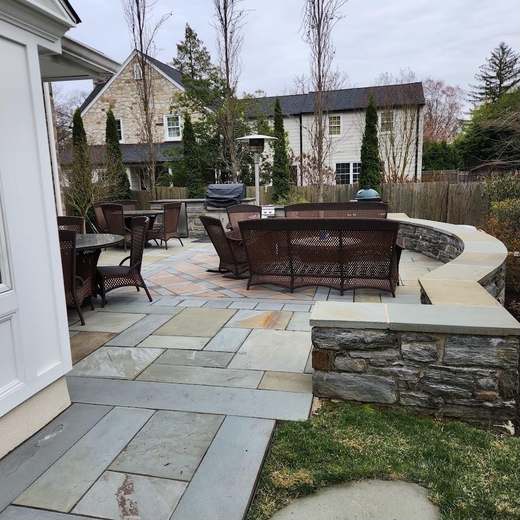
What drives paver patio cost
Paver patio cost is set mostly below the surface: how much soil comes out, how deep the base goes, where the water drains and how easily a crew can reach the yard. Material and pattern matter, but less than most people expect.
Read the guide -
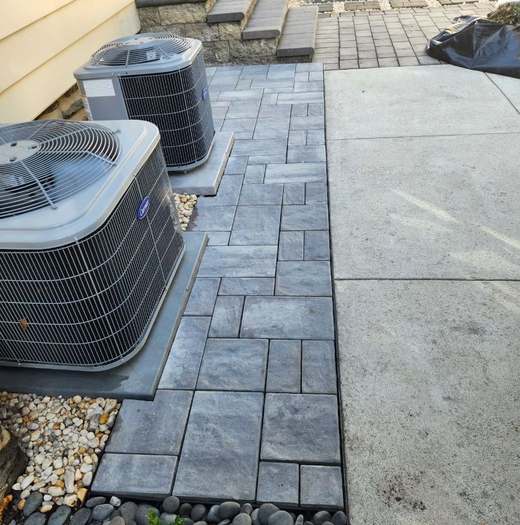
Pavers vs. poured concrete
In a freeze-thaw climate pavers usually outlast a poured slab: the joints absorb movement, and a damaged section can be lifted and reset. Poured concrete is a fair choice for simple, flat areas when it is placed well.
Read the guide -
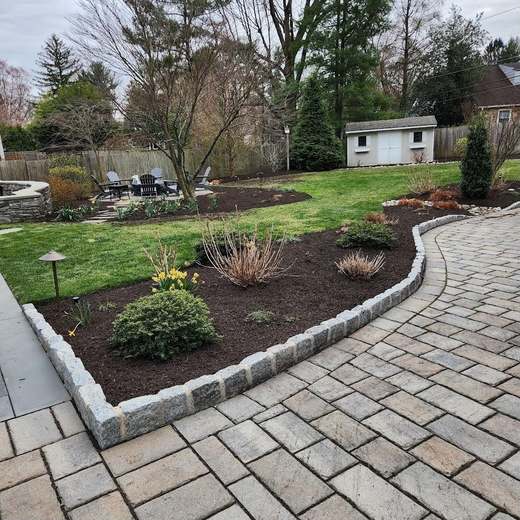
Polymeric sand and paver care
Polymeric sand is joint sand with a binder that hardens when wetted. It fails for a short list of reasons: a surface not blown clean, joints too shallow or not filled full, the wrong amount of water, or rain before it sets.
Read the guide -
How a retaining wall is built
Retaining walls usually fail because water is trapped behind them. A wall that lasts has a compacted stone footing, a buried first course, a setback, clean drainage stone, a daylighted pipe and backfill compacted in lifts.
Read the guide


Plants and pruning
What survives deer, shade and clay here, and when to cut or plant it.
-
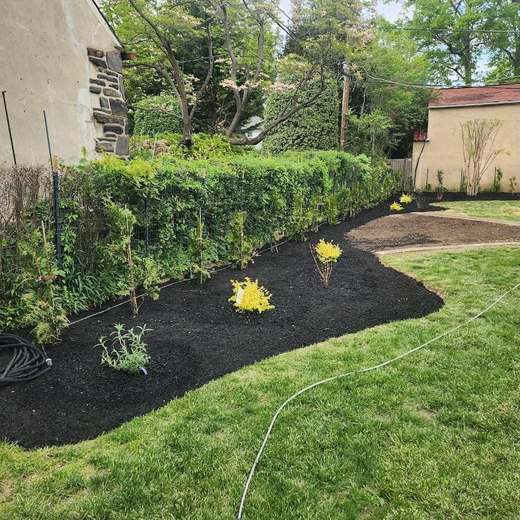
Deer resistant plants that hold up
Deer resistant plants are the ones deer eat last. Aromatic, fuzzy, spiny, toxic and leathery plants get passed over most of the year. In a hard winter, a hungry deer will try almost anything.
Read the guide -
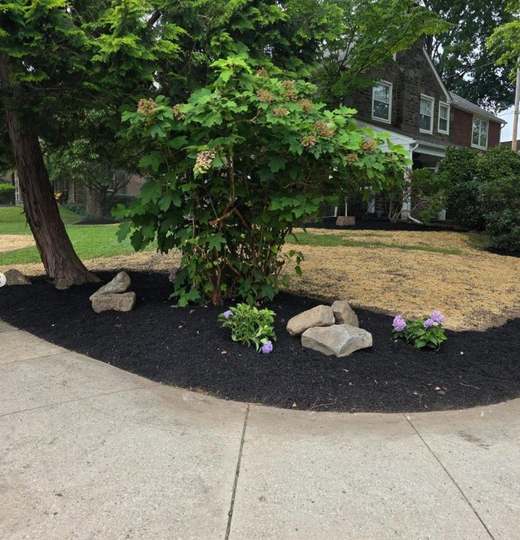
Native plants for a Main Line garden
The native plants that work best here are the ones matched to the spot: shade under old oaks, heavy clay, a wet low corner. Put the right native in the right place, water it through its first year, and it largely takes care of itself.
Read the guide -
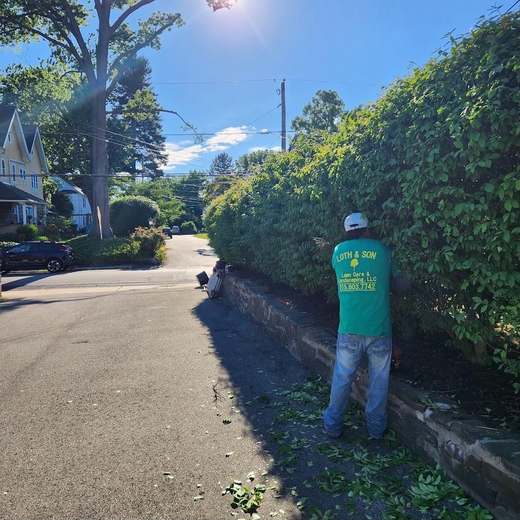
When to prune shrubs
Spring-flowering shrubs get pruned right after they bloom. Summer-flowering shrubs get pruned in late winter. Hedges and evergreens get sheared in late spring and early summer. Fall is the wrong time for almost all of it.
Read the guide -
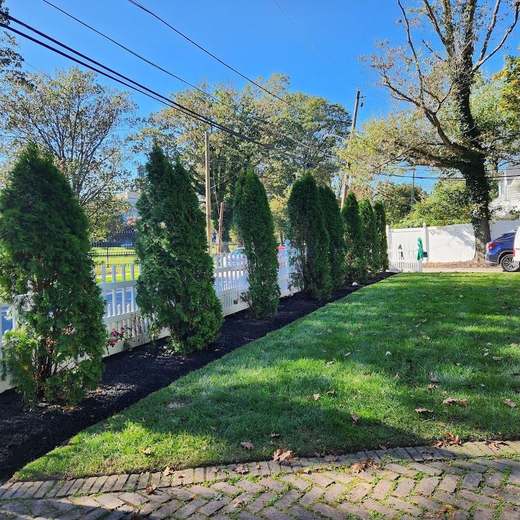
Best time to plant trees
In southeastern Pennsylvania the best time to plant trees is early to mid fall, with spring a close second. How deep the tree goes in decides more than the date does. Planting too deep is the most common mistake, and it kills trees slowly.
Read the guide


Lawn and beds through the year
Aeration, seed, leaves and mulch, timed to a southeastern Pennsylvania year.
-
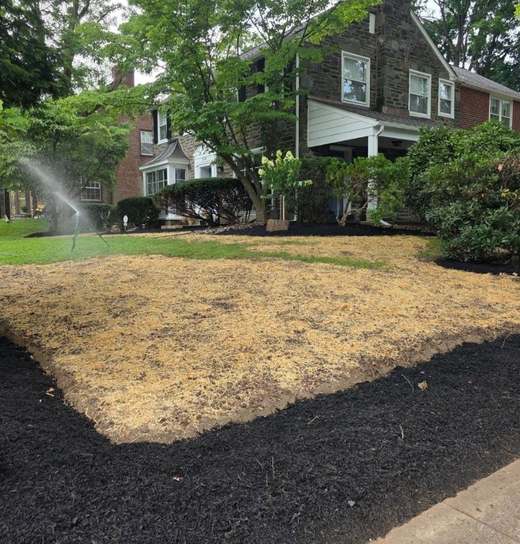
Core aeration and overseeding
For a cool-season lawn in southeastern Pennsylvania, the time to aerate and overseed is late August through September. Pull cores, not spikes, get seed into the holes, and water it lightly every day until it is up.
Read the guide -
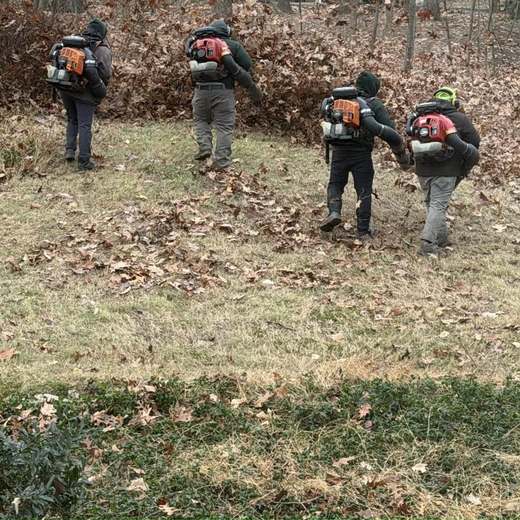
Fall cleanup and leaf removal
Leaves left matted on a lawn through winter kill the grass under them. A light fall can be mulched in with the mower; a heavy oak canopy has to be removed, usually in two visits, because oaks drop late.
Read the guide -
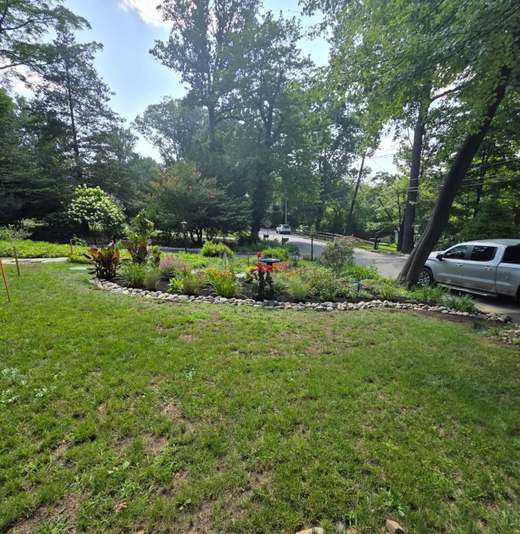
How much mulch you need, and when
Two to three inches total, measured from the soil, not two to three inches added every spring. For the volume: length times width in feet, times depth in inches, divided by 324, gives cubic yards.
Read the guide -
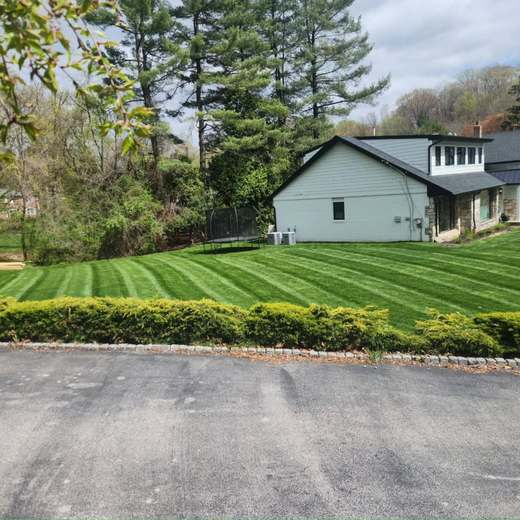
Lawn care calendar for Pennsylvania
Main Line lawns are cool-season grass, mostly tall fescue with some bluegrass and ryegrass. They grow hardest in spring and fall and struggle in summer heat. Fall, not spring, is when the real work pays off.
Read the guide


Drainage and decks
Where the water goes, and what holds a deck up.
-
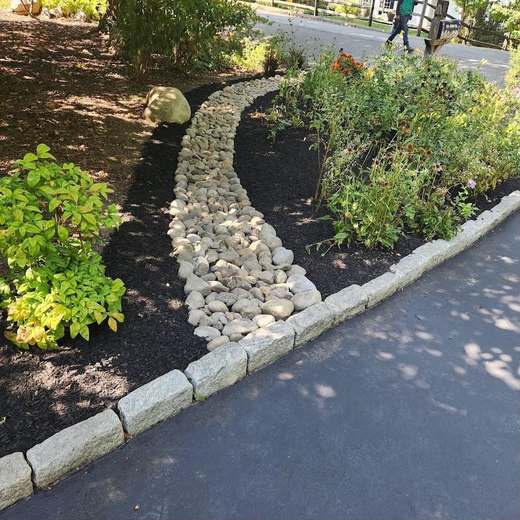
French drains & yard drainage
Most wet yards are fixed by moving roof water and correcting the grade. When a french drain is the answer, it only works if it is pitched to an outlet. Without one it is a buried bathtub.
Read the guide -
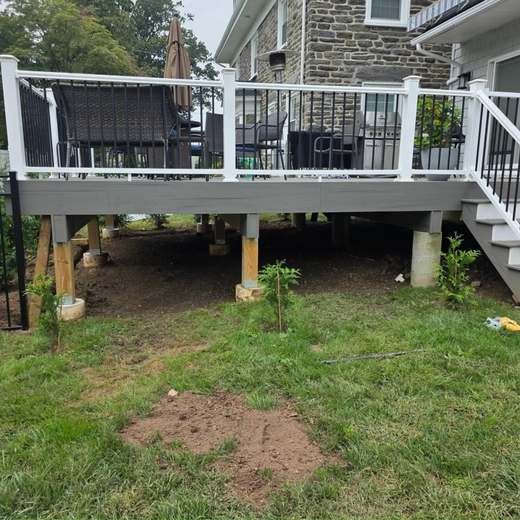
Composite vs wood decking
Wood costs less up front and needs staining every few years; capped composite and PVC trade that for washing, more heat in sun and sometimes tighter framing. Either way the structure underneath is pressure-treated lumber, and that is what decides how long a deck lasts.
Read the guide


Request an estimate
Get a second set of eyes on it.
Send a photograph of the space and a line about what is bothering you. A written estimate comes back in one to two business days.
Free, written down, answered in one to two business days. Or call Rathana on 215-803-7742.