
Start with where the water comes from
A wet yard is a symptom. Before anyone prices a french drain, walk the property in a real rain and watch where the water goes. The usual sources, in rough order of how often they turn out to be the cause:
- Downspouts dumping at the foundation.
- Ground that pitches toward the house instead of away from it.
- Compacted clay that will not let water soak in.
- A neighbor’s slope draining onto the lot.
- Less often, a high water table that keeps the ground wet from below no matter what happens on the surface.
Each one has a different fix, and the expensive fix for the wrong cause does nothing. A drain cut across the back lawn will not dry a basement that is wet because the gutters overflow at one corner.
Southeastern Pennsylvania makes this harder than it looks: much of the soil is silty clay, many older houses sit on lots graded once a long time ago, and decades of settling, mulch and added beds have often reversed the original pitch along the foundation.
| Water source | Usual fix |
|---|---|
| Downspouts dumping at the foundation | Discharge well clear of the house onto ground that falls away, or into solid pipe to daylight |
| Gutter overflowing at one corner | Clean or upsize the gutter |
| Ground pitched toward the house | Regrade to fall about six inches over the first ten feet, or shape a shallow swale |
| Sheet flow across clay | A dry creek bed or other surface swale, or a catch basin at the low point |
| Runoff off a patio or driveway | A channel drain at the low edge |
| A neighbor’s slope draining onto the lot | Start the fix along the line where the water enters |
| Groundwater moving through the soil | A french drain pitched to an outlet lower than every point of the pipe |
The cheap fixes come first
Roof water is the largest single volume most yards handle. Every downspout should discharge well clear of the foundation, onto ground that falls away, or into a solid pipe that carries it to daylight. An extension that ends in a low spot beside the house only moves the puddle a few feet. Check the gutters too: a clogged or undersized gutter that overflows at one corner puts the whole roof’s runoff in one place, every storm.
Grade is the second fix. As a rule, finished ground should fall away from the foundation about six inches over the first ten feet. Beds that have been mulched up for years often sit higher against the wall than they do at the lawn edge, which sends water straight at the house.
Pulling that soil back, adding topsoil where the ground has settled and reshaping a shallow swale to carry water around the house solves a surprising share of wet basements and soggy side yards before a trench is ever needed.
How a french drain is built
Find the source and the outlet
Watch the water in a rain, locate utilities, and confirm a discharge point lower than the whole run before any digging starts.
Dig and pitch the trench
Cut the trench to depth and set a steady fall along its floor toward the outlet, checked with a level or laser rather than by eye.
Line it with fabric
Lay geotextile fabric in the trench with enough overlap to fold back over the top of the stone.
Set stone and pipe
Place a bed of clean drainage stone, lay the perforated pipe holes down on it, and confirm the pitch again.
Backfill and wrap
Cover the pipe with more clean stone, fold the fabric over the top, and finish with soil and sod or decorative stone.
Build the outlet and test it
Finish the daylight outlet, pop-up emitter or dry well, then run a hose into the high end and watch it come out the low end.
How a french drain actually works
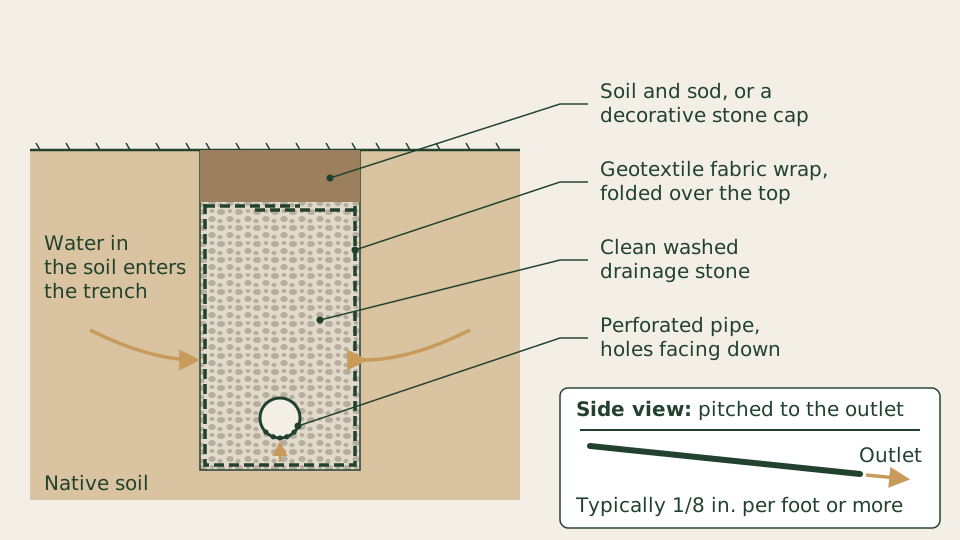
A french drain is a trench that gives water an easier path than the soil around it. Water moving through the ground finds the trench, drops into the stone, collects in the perforated pipe at the bottom and runs downhill to an outlet. The trench is lined with geotextile fabric so fine soil cannot wash in and clog the stone. It is filled with clean, washed drainage stone. Crushed stone with fines in it packs tight and stops moving water.
The pipe goes in with the holes facing down. That surprises people, but water collects at the bottom of the trench and rises from there, and holes at the bottom let it enter the pipe as soon as it reaches the pipe instead of standing in the trench until it climbs over the top.
The whole run is pitched to a steady fall, typically no less than about an eighth of an inch per foot, to an outlet at daylight, a storm connection where one is permitted, or a properly sized dry well.
A drain with no outlet is a buried bathtub
The most common failed drain is a trench of stone and pipe that goes nowhere. Water fills it, has no way out, and soaks back into the same wet ground, often closer to the house than before. In clay soil it can hold water for days. If a contractor cannot show where the water exits, and that the exit is lower than every point of the pipe, the drain will not work no matter how well the trench is built.
Clay is the reason dry wells need care. A dry well is a buried chamber or stone pit that holds water while it soaks into the surrounding soil. In sandy ground that happens quickly. In tight clay it may barely happen at all, so a dry well sized on hope fills during the first storm and stays full.
A percolation test, digging a hole and timing how fast water drains from it, tells you whether a dry well is a reasonable outlet on that lot or whether the water has to be carried to daylight instead.
Water you move has to go somewhere, and it cannot be your neighbor’s basement. Redirecting concentrated flow onto an adjoining property can create real liability, and a good drainage plan keeps discharge on your own lot, spread out rather than piped to a single point at the property line.
Most Main Line townships also regulate stormwater, impervious surface and connections to storm sewers, so check with the township before tying into anything or adding a large paved area. If water arrives from an uphill property, the fix usually starts along the line where it enters the lot, well before it reaches the house.
Surface water: dry creeks, channel drains and catch basins
Not every problem is underground. When water sheets across a lawn in a storm, a dry creek bed works as a lined surface swale: a shallow channel shaped to carry the flow, laid with fabric and river stone so it does not erode, and set to look like part of the planting rather than a ditch. Built with a proper fall, it moves a lot of water and needs nothing more than an occasional cleanout of leaves.
Hard surfaces need hard drainage. A channel drain, a narrow grated trench, catches water at the low edge of a patio or across the bottom of a driveway before it reaches a garage door or a step.
A catch basin is a grated box set at a low point in the yard that collects surface water, holds back debris in a sump, and sends the rest through solid pipe to an outlet. Both are only as good as the pipe run behind them.
What drives the cost of yard drainage
There is no honest single figure for a french drain, because the cost is set by the site. What drives it:
- The length of the run and how far the water has to travel to reach a legal outlet, which matter most.
- Trench depth, and what the trench meets: roots, rock, buried utilities and old foundations all slow the dig.
- Access, which decides whether a small machine can work or every yard of soil moves by hand.
- Restoring what the trench crosses, whether lawn, beds, a walk or a patio.
- Outlet type, plus catch basins, channel drains and dry wells, each of which adds work.